The short answer
A product labelled vegan should contain no animal-derived ingredients and should not have been tested on animals. In practice, the picture is more complicated.
There is no legal definition
“Vegan” is not a protected term in UK law. Any brand can use it without meeting a specific standard. This means two products both labelled “vegan” can have very different ingredient lists and very different manufacturing processes.
What to look for instead
The most reliable signal is certification from the Vegan Society or a comparable body — their trademark requires a full assessment of ingredients, processing aids and manufacturing. Products in this shop are either certified or have been confirmed directly with the manufacturer.
The hidden ingredients
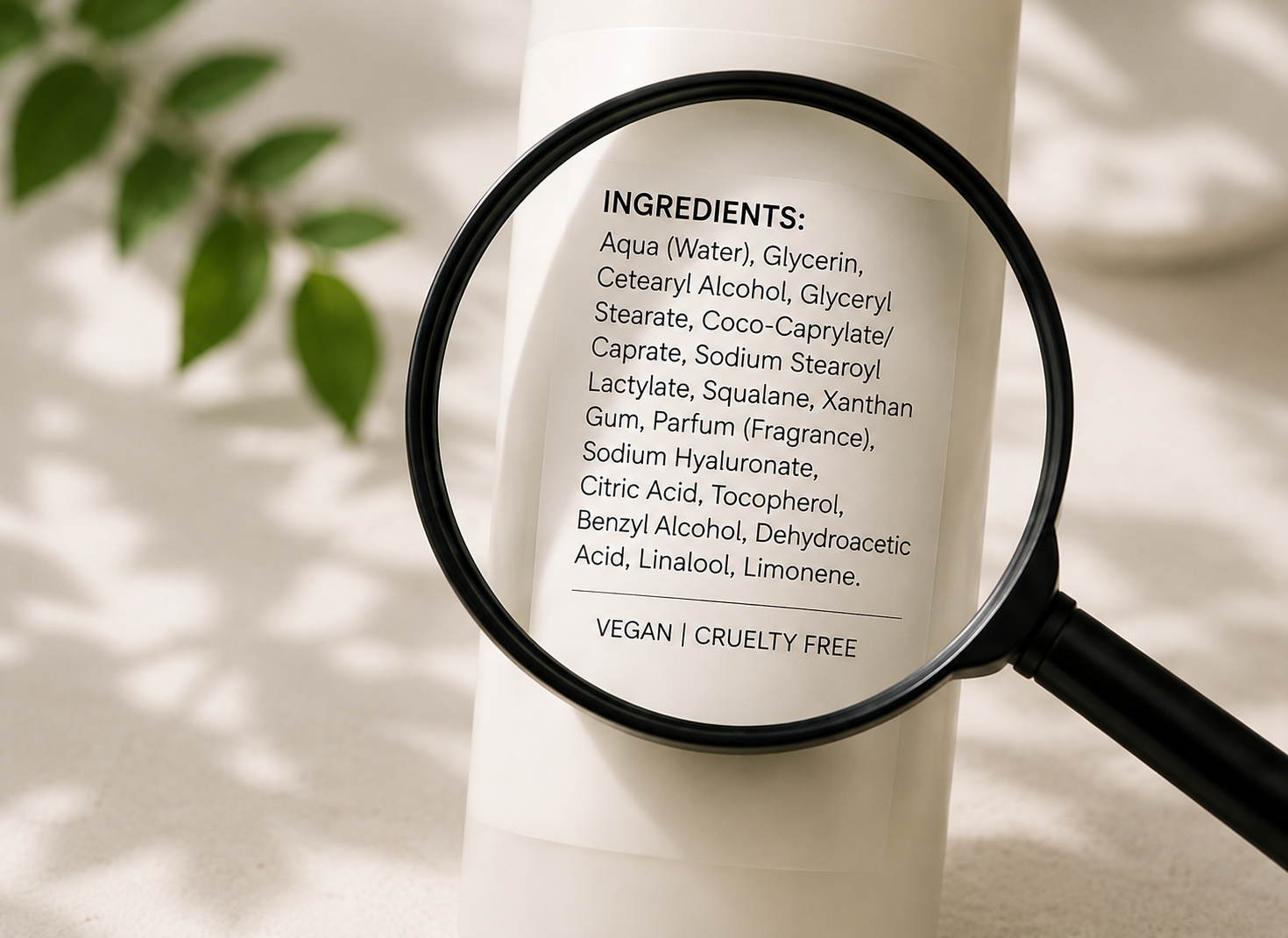
Some animal-derived ingredients appear under names that are not immediately recognisable. Common ones in beauty products include:
- Lanolin — derived from sheep’s wool. Found in lip balms, moisturisers and hair products.
- Carmine (E120, CI 75470) — red pigment from crushed insects. Found in lipsticks and blushers.
- Squalene — can be derived from shark liver oil. Now commonly plant-derived (from olives) but worth checking.
- Keratin — protein derived from animal hair, hooves or feathers. Found in hair treatments.
- Collagen — derived from animal skin, bones and connective tissue. Found in anti-ageing products.
- Glycerin — can be plant or animal-derived. Extremely common. Worth confirming source if unlabelled.
- Stearic acid — can be plant or animal-derived. Found in soaps, moisturisers and shampoos.
When a product isn’t labelled, it doesn’t mean it’s not vegan. It means you need to check.